

Hail's Impact: Damage Trends in 2026
Hailstorms are becoming increasingly common and severe, leading to a surge in vehicle damage. While precise data for 2026 isn’t available yet, the trend is clear: hail-related insurance claims have been steadily rising. In 2023, the National Insurance Crime Bureau (NICB) reported over $14.5 billion in estimated insured losses due to hail events, and preliminary data from 2024 suggests this number will be similar or higher. Texas, Colorado, and Kansas consistently rank as the states with the highest number of hail damage claims, but we're seeing increases in areas not traditionally considered 'hail alleys', like the Midwest and even the East Coast.
The average cost of a hail damage claim varies widely depending on the severity of the damage and the vehicle. A moderate hailstorm can easily result in $2,500 to $5,000 in repairs per vehicle. More severe storms, with larger hail stones, can push those costs significantly higher. Small, dime-sized dents are relatively easy to repair, but larger, quarter-sized or golf ball-sized dents, especially those with sharp creases, require more extensive and expensive work. Claims for cracked windshields and broken rear windows are also rising.
Hail damage isn’t just cosmetic; it can impact a vehicle's value and structural integrity. Even minor dents can create entry points for rust, leading to long-term problems. The size and shape of hail stones dictate the type of damage. Smaller, uniform hail typically creates numerous, shallow dents. Larger, irregular hail can cause sharper, more defined dents and even break glass. Predicting hail damage in 2026 is challenging, but given the current trajectory and climate change effects, expect continued increases in both the frequency and severity of these events.
Decoding Your Insurance Policy
When hail strikes, your insurance policy is your first line of defense. Most standard auto insurance policies cover hail damage under the comprehensive portion of your coverage. This typically comes with a deductible, which is the amount you’re responsible for paying out-of-pocket before your insurance kicks in. Common deductibles range from $250 to $1,000, but this varies depending on your policy. Collision coverage, on the other hand, generally doesn’t cover hail damage, as it applies to accidents involving other vehicles or objects.
Your insurance company determines your vehicle's value using one of two methods: Actual Cash Value (ACV) or Replacement Cost Value (RCV). ACV accounts for depreciation, meaning the car's current worth, considering its age and mileage. RCV, less common, pays for a brand-new replacement vehicle. If your car is deemed a "total loss" – meaning repair costs exceed its value – the insurance company will offer a settlement based on either ACV or RCV.
Insurance companies aren’t always eager to pay claims quickly or for the full amount. Be prepared to advocate for yourself. Document everything: take photos of the damage, get multiple repair estimates, and keep detailed records of all communication with your insurer. Don’t be afraid to negotiate if you believe the initial offer is too low. Knowing your policy’s terms and conditions—and being prepared to push back when necessary—can make a significant difference in the outcome.
- Comprehensive Coverage: Typically covers hail damage.
- Collision Coverage: Usually does not cover hail damage.
- Deductible: The amount you pay out-of-pocket.
- ACV (Actual Cash Value): Vehicle’s current worth, factoring in depreciation.
- RCV (Replacement Cost Value): Pays for a new replacement vehicle (less common).
Paintless Dent Repair (PDR): The Preferred Method
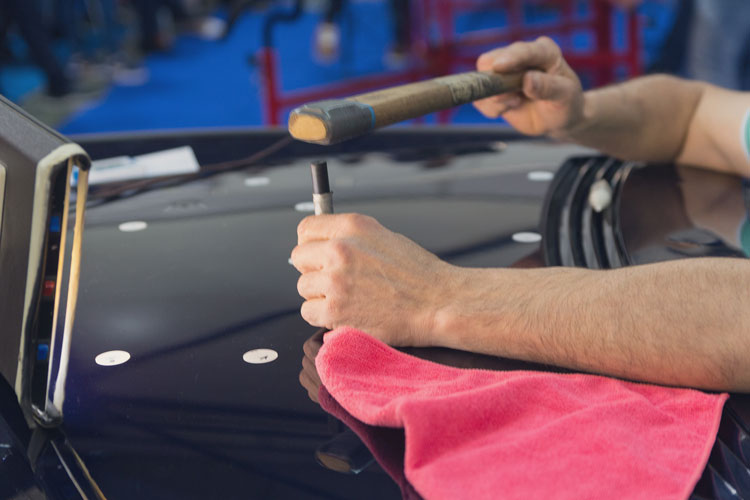
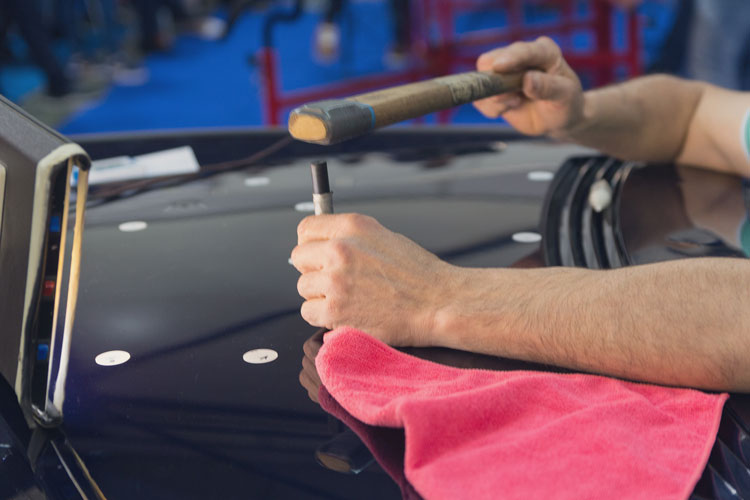
Paintless Dent Repair, or PDR, is often the gold standard for fixing hail damage. Unlike traditional body repair methods that involve filling, sanding, and repainting, PDR focuses on gently massaging the metal back to its original shape from behind the panel. This preserves the factory paint finish, which is a major advantage. It’s also significantly faster and typically less expensive than conventional repairs. A skilled technician can often repair multiple dents in a single day.
The process relies on specialized tools, including long, slender rods and lights. Technicians use the rods to access the back of the dented panel and carefully push the metal back into place. Lights highlight the dents and imperfections, allowing the technician to see exactly what they’re doing. You may have seen DIY kits, like those sold by Harbor Freight, that attempt to replicate this process. While these kits can be helpful for very minor dents, they rarely achieve the same quality of results as professional PDR.
PDR isn’t a miracle cure. It’s most effective on dents that are relatively shallow and don’t have sharp creases or paint damage. If the paint is cracked or the metal is severely stretched, PDR may not be an option. In those cases, traditional body repair methods are necessary. PDR requires a high degree of skill and experience. An inexperienced technician can easily make the damage worse, so choosing a qualified professional is essential.
DIY Dent Repair: When to Try It
Let’s be honest: tackling hail damage yourself is tempting, especially if you’re on a tight budget. There are several DIY methods available, but I'll be upfront – the results are often less than ideal. Suction cup dent pullers can work on very shallow dents, but they often lack the power to pull out deeper or more complex damage. Heat-and-cold methods, involving using a hairdryer and compressed air, can sometimes help, but there’s a risk of damaging the paint if you’re not careful.
Body filler, also known as Bondo, is another option, but it’s a last resort. It requires sanding, applying the filler, priming, and painting, and it’s easy to end up with an uneven surface or visible imperfections. The YouTube video showing dent repair tips using body filler demonstrates the process,
Before you attempt any DIY repair, seriously consider your skill level and the extent of the damage. If you’ve never worked on cars before, or if the dents are large, numerous, or have sharp creases, it’s best to leave it to the professionals. You could easily end up making the damage worse and costing yourself more money in the long run. A botched DIY repair can actually decrease your car’s value.
Body Filler: A Last Resort?
Body filler, while sometimes necessary, isn’t the preferred method for repairing hail damage. It’s best suited for larger, more complex dents where PDR isn’t feasible. The process involves thoroughly sanding the damaged area to create a smooth surface for the filler to adhere to. The filler is then applied in thin layers, allowed to dry, and sanded again to match the surrounding contours. This is followed by priming and painting to blend the repaired area with the rest of the vehicle.
The biggest challenge with body filler is achieving a seamless repair. If the filler isn’t applied correctly, it can crack, shrink, or become uneven over time. Proper surface preparation is absolutely critical. Any rust or corrosion must be removed before applying the filler, and the area must be thoroughly cleaned and degreased. Even with meticulous preparation, achieving a flawless finish requires significant skill and experience.
Another potential issue is adhesion. If the filler doesn’t bond properly to the metal, it can peel or flake off. Using the correct type of filler for the material of your car’s body panels (steel, aluminum, etc.) is essential. And remember, even a well-executed body filler repair won’t be as strong or durable as the original metal. It’s a fix, not a restoration.
Finding a Reputable Auto Body Shop
For most people, the best course of action is to take their hail-damaged vehicle to a professional auto body shop. But with so many options available, how do you choose a trustworthy one? Look for shops that are certified by organizations like I-CAR, which indicates that the technicians have received specialized training in collision repair techniques. Check online reviews on sites like Google and Yelp, but take them with a grain of salt. A few negative reviews aren’t necessarily a red flag, but a pattern of complaints should raise concerns.
A clean, organized shop is a good sign. It suggests that the technicians take pride in their work and pay attention to detail. Don’t be afraid to ask questions. A reputable shop will be happy to explain the repair process, discuss the different options available, and provide a detailed estimate. Ask about the type of paint they’ll be using and whether they work directly with your insurance company.
Beware of shops that pressure you into signing a contract or offer suspiciously low estimates. A price that seems too good to be true often is. Get multiple estimates from different shops before making a decision. And always make sure the shop is licensed and insured.
Auto Body Shop Decision Matrix: Hail Damage Repair
| Characteristic | High Importance | Medium Importance | Low Importance |
|---|---|---|---|
| Years in Business | 5+ Years | 2-5 Years | Less than 2 Years |
| Customer Reviews | 4.5-5 Star Rating (Significant Volume) | 4-4.5 Star Rating (Moderate Volume) | Below 4 Star Rating or Limited Reviews |
| Industry Certifications | I-CAR Gold Class, ASE Certified Technicians | I-CAR Certified Technicians | Limited or No Certifications |
| Insurance Partnerships | Direct Repair Program (DRP) with Multiple Major Insurers | Partnerships with Several Insurers | No Established Insurance Partnerships |
| Warranty Offered | Lifetime Warranty on Repairs | 3-5 Year Warranty | Limited Warranty or No Warranty |
| Paintless Dent Repair (PDR) Capability | Extensive PDR experience and tools | Offers PDR as a service | Does not offer PDR |
| Repair Estimates | Detailed, itemized estimates provided promptly | Estimates available within a reasonable timeframe | Difficult to obtain or vague estimates |
Illustrative comparison based on the article research brief. Verify current pricing, limits, and product details in the official docs before relying on it.
Futureproofing Your Vehicle
While A car cover is the most obvious solution, but it can be cumbersome to put on and take off. Hail blankets, which are padded covers specifically designed to absorb impact, offer better protection but can be expensive. Parking your car in a garage or under a carport is the best preventative measure, but that’s not always possible.
Looking further ahead, there’s some discussion about developing more hail-resistant materials for car bodies. Some manufacturers are experimenting with advanced alloys and polymers that are less susceptible to denting. However, these materials are still in the early stages of development and are likely to be expensive. It’s also possible that future vehicles will incorporate more sophisticated sensors and automated systems that can detect approaching hailstorms and automatically deploy protective measures.
For now, the best approach is to be prepared. Stay informed about weather forecasts, and take steps to protect your vehicle whenever a hailstorm is predicted. Investing in a quality car cover or finding covered parking can save you a lot of headaches—and money—in the long run.
2026 Claim Predictions & Emerging Trends
Based on current trends, it’s likely that hail damage claims will continue to rise in 2026. Climate change is expected to exacerbate extreme weather events, including hailstorms. We may see an expansion of "hail alleys" into regions that haven't historically experienced frequent hail damage. This increased demand could lead to longer repair times and higher costs.
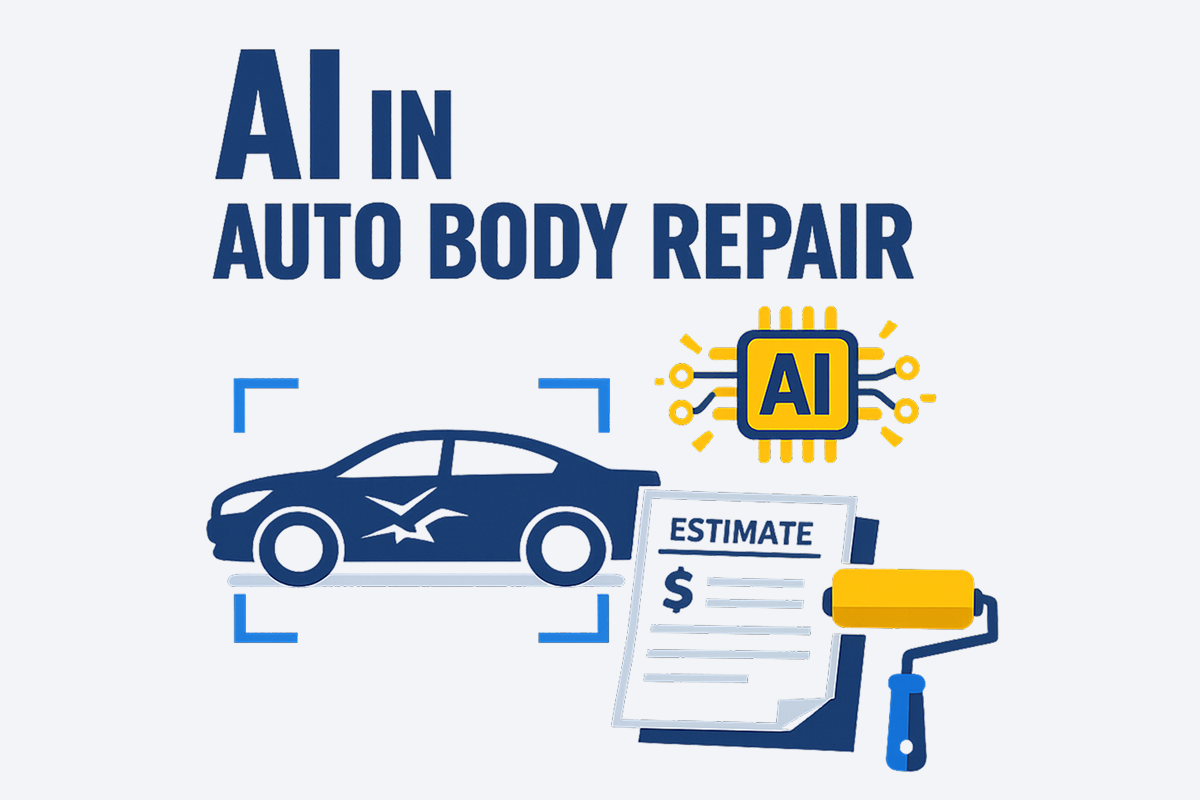
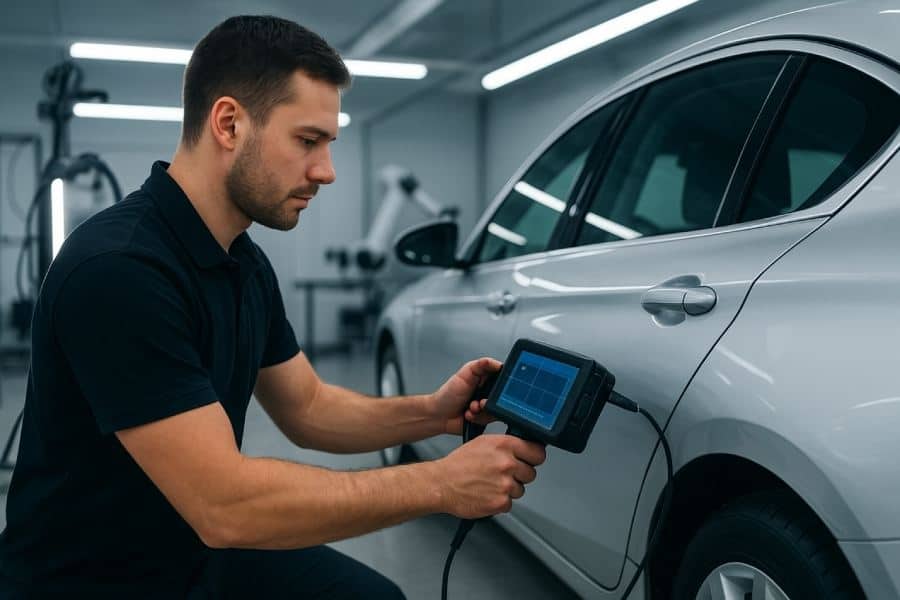
One emerging trend is the use of drones and artificial intelligence to assess hail damage. Some insurance companies are already using drones to quickly inspect vehicles and estimate repair costs. AI-powered tools can also help to identify patterns and predict future hail events. Another potential development is the wider adoption of PDR for minor dents, as the technology becomes more refined and affordable.
However, several uncertainties remain. Changes in insurance policies, the availability of skilled technicians, and the cost of materials could all impact the future of hail damage repair. It’s also possible that new technologies or repair methods will emerge that we haven’t even anticipated yet. Ultimately, staying proactive—protecting your vehicle when possible and understanding your insurance coverage—will be the best defense against the increasing threat of hail damage.
No comments yet. Be the first to share your thoughts!