

Why Winter is Brutal on Your Car's Body
Picture this: you’re rushing to work on a frigid morning, turning the key in the ignition only to hear a sluggish crank. Or maybe you finally get going, only to notice a fresh scratch on your door that definitely wasn’t there yesterday. Winter is notoriously hard on vehicles, and it’s not just about getting the engine started. The combination of harsh weather and road treatments takes a serious toll on your car’s exterior.
What makes winter so damaging? It’s a perfect storm of factors. Road salt, used extensively to melt ice and snow, is incredibly corrosive. The constant freeze-thaw cycles expand and contract materials, leading to cracks and weakening structures. Snow and ice themselves can cause dents and scratches, either from direct impact or from poorly executed removal attempts. Even if you take good care of your car, winter presents challenges.
The damage isn’t always immediately obvious. Rust develops over time, starting as small imperfections and gradually worsening. Chipped paint exposes bare metal, accelerating corrosion. Dents and scratches, while cosmetic at first, can create entry points for rust to take hold. It's easy to think of these as just cosmetic issues, but they really are the beginning of bigger problems. Ignoring them now will mean bigger, more expensive repairs later.
Salt and Corrosion: The Silent Winter Destroyer
Road salt isn't just an annoyance; it’s a scientifically proven corrosive agent. Sodium chloride, the most common type of road salt, speeds up the oxidation of metals – that’s rust. When salt mixes with water, it creates an electrolyte solution that facilitates the flow of electricity, essentially creating a battery that accelerates the rusting process. This is why you’ll see so much corrosion on vehicles in areas that use a lot of salt.
There are different types of road salt, and some are more damaging than others. Sodium chloride is the cheapest and most widely used, but also the most corrosive. Calcium chloride and magnesium chloride are often used as alternatives, as they’re effective at lower temperatures and slightly less corrosive. However, even these alternatives still contribute to rust formation. According to the NHTSA, understanding the impact of these chemicals is a key part of winter vehicle preparation.
It’s a common misconception that 'rust-proofed' cars are immune to these effects. While rustproofing treatments can provide a layer of protection, they aren’t foolproof. They slow down the process, but salt can still find its way into crevices and start corrosion. Regular washing and inspection are still essential, even if your car has been rustproofed. The goal is to minimize exposure and address any damage as quickly as possible.
- Sodium Chloride: Most common, most corrosive
- Calcium Chloride: Effective at lower temps, less corrosive than NaCl
- Magnesium Chloride: Similar to calcium chloride in effectiveness and corrosiveness
Pre-Winter Auto Body Prep: Your First Line of Defense
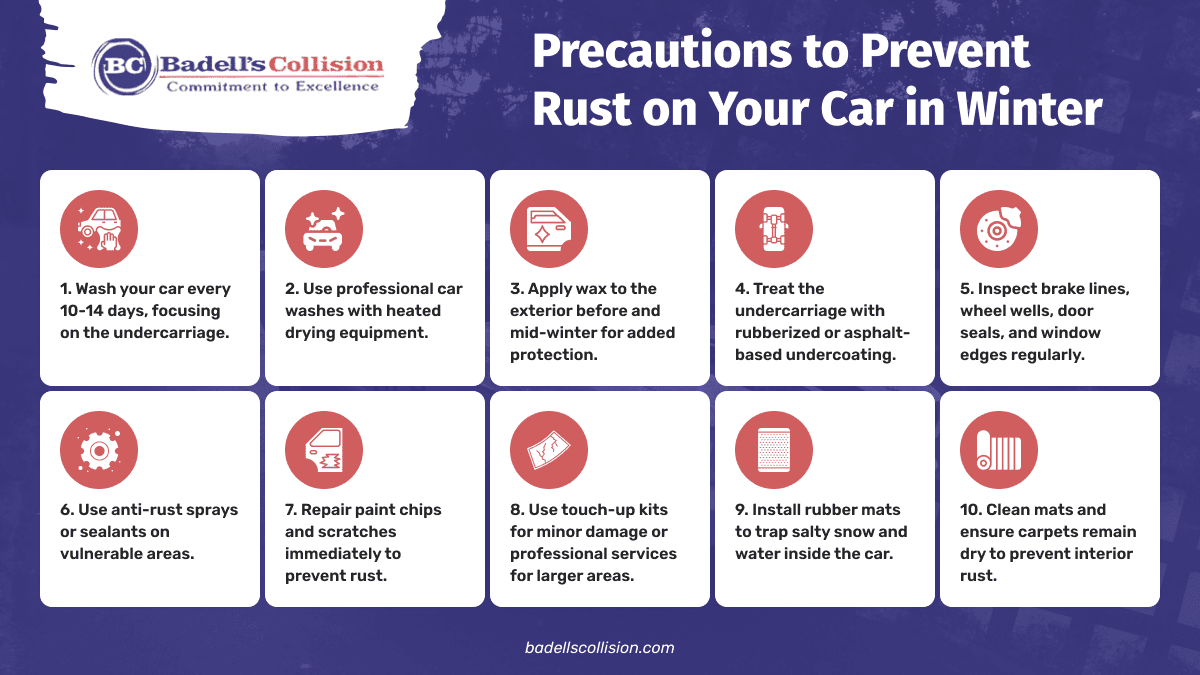
The best way to protect your car from winter damage is to prepare it before the cold weather arrives. Start with a thorough wash, paying close attention to the undercarriage, where salt and grime accumulate. A good wax job adds a protective layer to your paint, helping to repel salt and water. This is a simple step that makes a surprisingly big difference.
Consider applying an undercoating to your vehicle. Undercoating creates a barrier between the metal of your car and the corrosive elements on the road. There are different types of undercoating available – rubberized, asphalt-based, and wax-based – each with its own pros and cons. Some newer coatings are designed to be more flexible and durable, but I’m not up to date on the latest technologies.
Before winter sets in, take the time to inspect your car for any existing damage. Small chips and scratches can quickly become larger problems when exposed to salt and moisture. Repairing these imperfections now will prevent them from escalating into costly repairs later. Don't ignore that little chip in the door; it’s a potential entry point for rust.
Protecting Your Paint from Snow and Ice Scrapes
Removing snow and ice from your car can easily cause damage to the paint. Metal scrapers and abrasive brushes can leave scratches, especially if you’re applying too much pressure. The John Jones Auto Group emphasizes the importance of using the right tools for the job to minimize cosmetic damage during winter months.
I recommend using a foam snow brush to gently sweep away loose snow. For ice, invest in a sturdy plastic ice scraper with a comfortable grip. Avoid using metal scrapers or anything that could scratch the paint. And never use hot water to melt ice – the sudden temperature change can crack your windshield. It's a tempting shortcut, but the risk isn't worth it.
For those looking for maximum paint protection, paint protection film (PPF) is a worthwhile investment. PPF is a clear, self-healing film that’s applied to the car’s exterior. It’s expensive, but it provides a very high level of protection against scratches, chips, and other damage. It’s a good option if you live in an area with particularly harsh winters or frequently drive on salted roads.
Dealing with Dents and Scratches: What You Can (and Can't) Fix Yourself
Let’s be realistic: some auto body repairs are best left to the professionals. Small scratches, like those from a brush with a shopping cart, might be fixable with touch-up paint. But larger dents, especially those that have damaged the paint, usually require professional attention. Attempting a DIY repair on a significant dent could actually make the problem worse.
Paintless dent repair (PDR) is a great option for minor dents where the paint hasn’t been damaged. PDR technicians use specialized tools to massage the metal back into its original shape from behind the panel. It’s a relatively inexpensive and non-invasive repair method. However, it’s not suitable for all types of dents.
For more extensive damage, traditional body work is necessary. This involves filling dents, sanding, and repainting. It’s more involved and expensive than PDR, but it’s the only option for significant damage. Always get estimates from multiple auto body shops before committing to a repair. Compare prices, warranties, and customer reviews.
Winter Car Care Habits: Small Steps, Big Impact
Protecting your car from winter damage isn't a one-time thing; it requires consistent effort throughout the season. Frequent washing is crucial, even when your car doesn't look dirty. Road salt is invisible, but it’s constantly working to corrode your vehicle. Washing removes the salt and prevents it from building up.
Regularly inspect your car for new damage. Look for rust spots, chips, and scratches. The sooner you address these issues, the easier and cheaper they will be to fix. Don’t put off repairs, hoping they’ll go away on their own. They won’t. They’ll only get worse.
Finally, remember to keep your tires properly inflated. Lower temperatures reduce tire pressure, which can affect handling and braking, especially in snow and ice. Check your tire pressure regularly and adjust it as needed. Maintaining proper tire inflation is a simple but important safety measure.
When to Seek Professional Auto Body Repair
There are certain situations where professional auto body repair is absolutely essential. Significant rust damage that compromises the structural integrity of your vehicle needs immediate attention. Large dents that affect the car’s alignment or safety features should also be addressed by a professional.
A cracked windshield is another serious issue that requires professional repair or replacement. Even a small crack can weaken the windshield and make it more likely to shatter in an accident. And if any of your car’s safety systems – such as airbags or sensors – have been damaged, don’t drive the vehicle until it’s been inspected and repaired.
Driving with damaged components can be dangerous. Don’t risk your safety or the safety of others. When in doubt, consult with a reputable auto body shop. Look for shops that are certified by organizations like I-CAR or ASE, and read online reviews to get an idea of their quality and customer service.


No comments yet. Be the first to share your thoughts!