

Fixing car dents budget
2026 guide: How to Fix Car Dents and Repair Leather Seats at Home for Under $50 troubleshooting should start with a clear boundary: what is actually broken, and what still works normally. Check the display, network connection, paired devices, app access, and recent updates before assuming the whole system needs a reset. A small connection failure can make the main screen feel unreliable even when the core system is fine. Work from low-risk checks to deeper resets. Confirm power state, safe parking, account access, and signal first. Then restart the interface, wait for it to reload completely, and test the original symptom. Avoid changing multiple settings at once because that makes it harder to know which step actually fixed the problem. If the issue affects safety information, repeats after every restart, or appears with warning messages, treat the reset as a temporary diagnostic step rather than the final fix. Document the symptom and move to official support instead of stacking more DIY attempts.
The simplest way to use this section is to verify the seller, compare the total cost, and resolve the biggest risk before you commit.
Shortlist real options
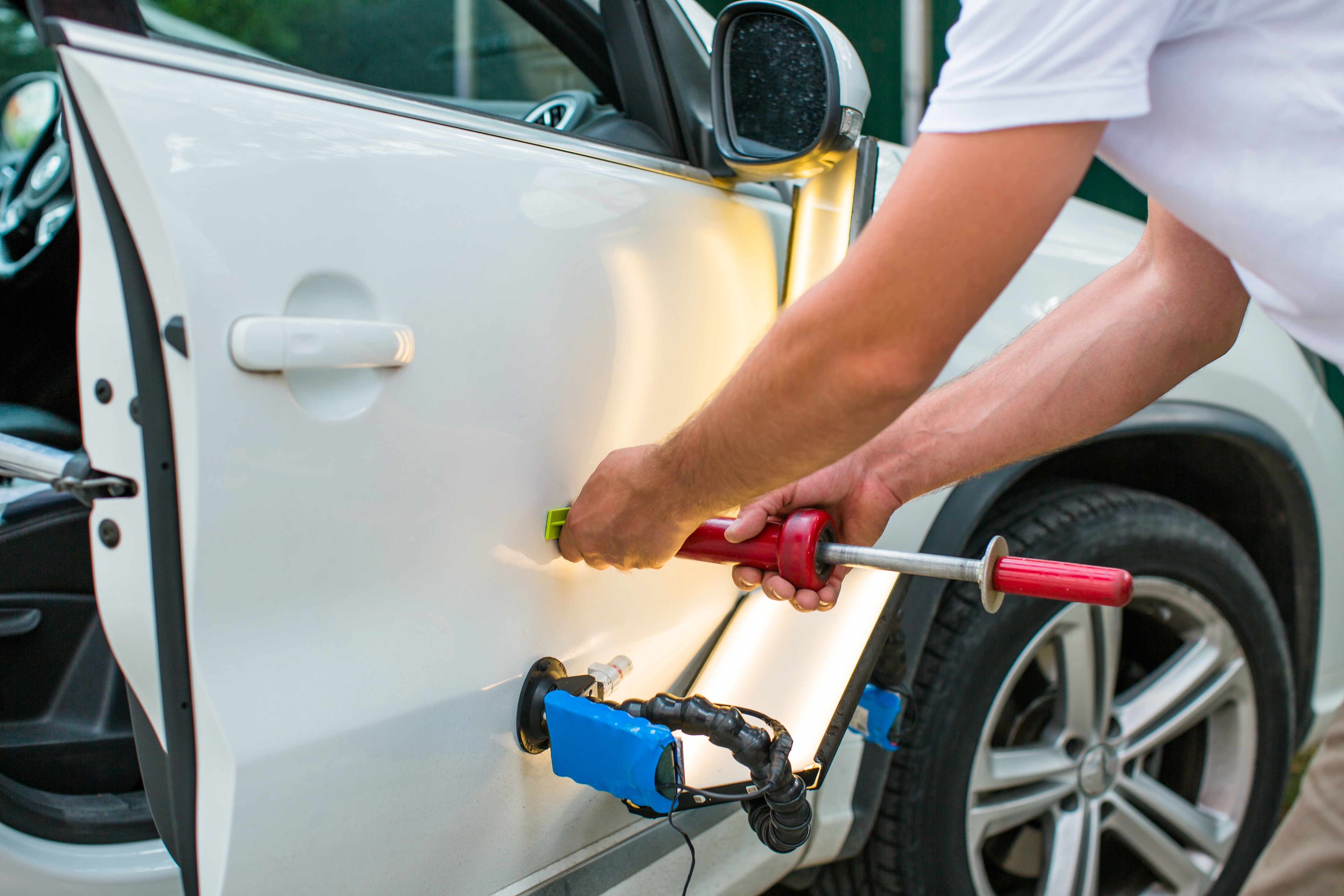
Fixing car dents at home requires matching the repair method to the dent’s size, depth, and location. While professional paintless dent repair (PDR) costs hundreds, DIY kits offer a fraction of that price if you pick the right tools for the job.
Not every dent responds to heat or suction. A small ding on a flat panel might pop out with a plunger, while a creased door edge needs body filler and sanding. Below are the strongest options for common scenarios, compared by cost, skill level, and best use case.
| Method | Est. Cost | Best For | Skill Level |
|---|---|---|---|
| Heat Gun + Compressed Air | Under $30 | Small plastic bumper dents | Beginner |
| Dent Puller Kit | $15–$50 | Shallow dings on flat panels | Beginner |
| Body Filler (Bondo) | $10–$20 | Creases or dented metal | Intermediate |
| Plunger/Cup Kit | Under $10 | Large, shallow suction-friendly dents | Beginner |
Heat Gun + Compressed Air works by expanding and then rapidly contracting materials. Heat the dent with a hair dryer or heat gun until warm, then spray cool compressed air from an inverted can. This shrinks the plastic back into shape. It’s ideal for minor bumper dents where paint isn’t cracked. Compressed air costs under $20, making it one of the cheapest fixes available.
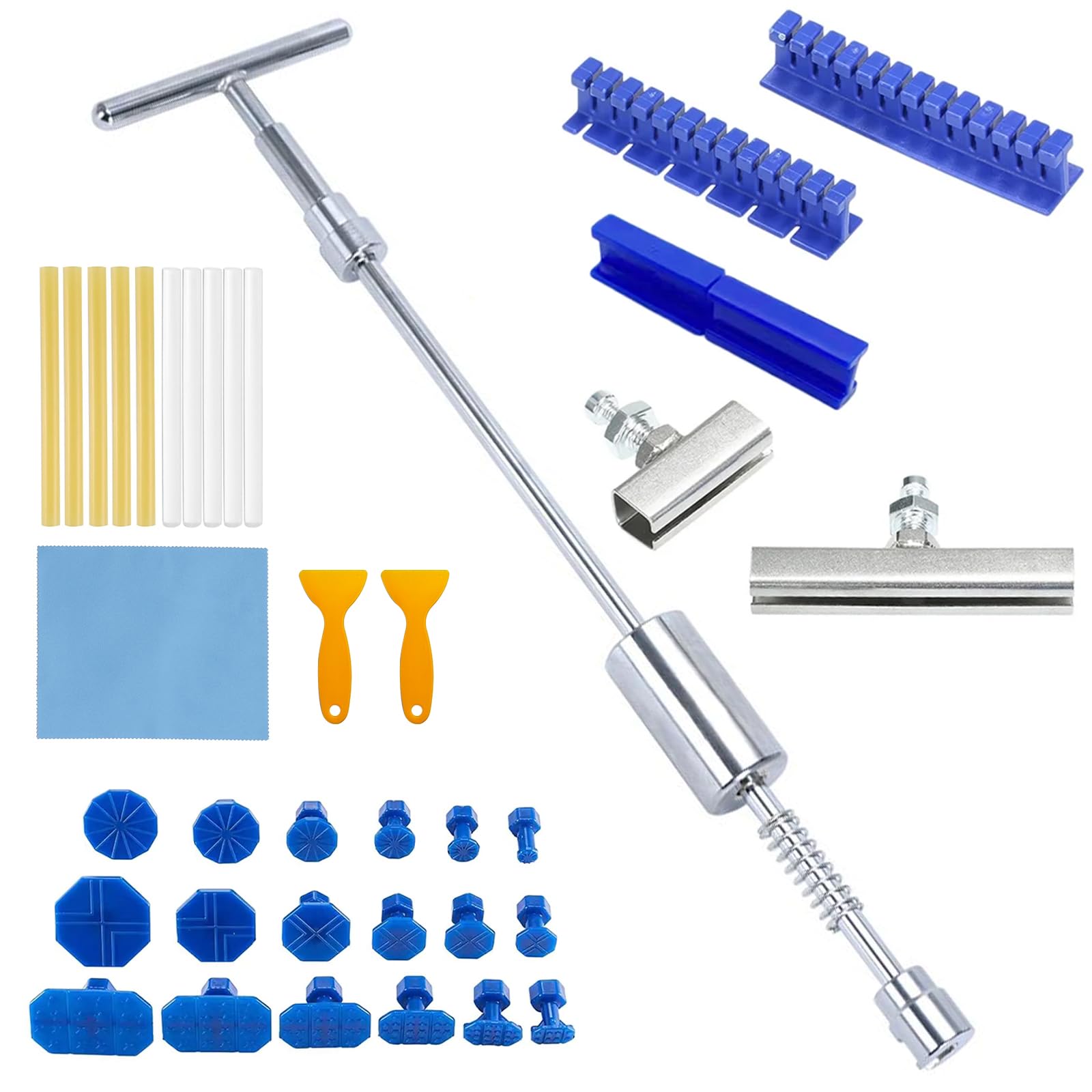
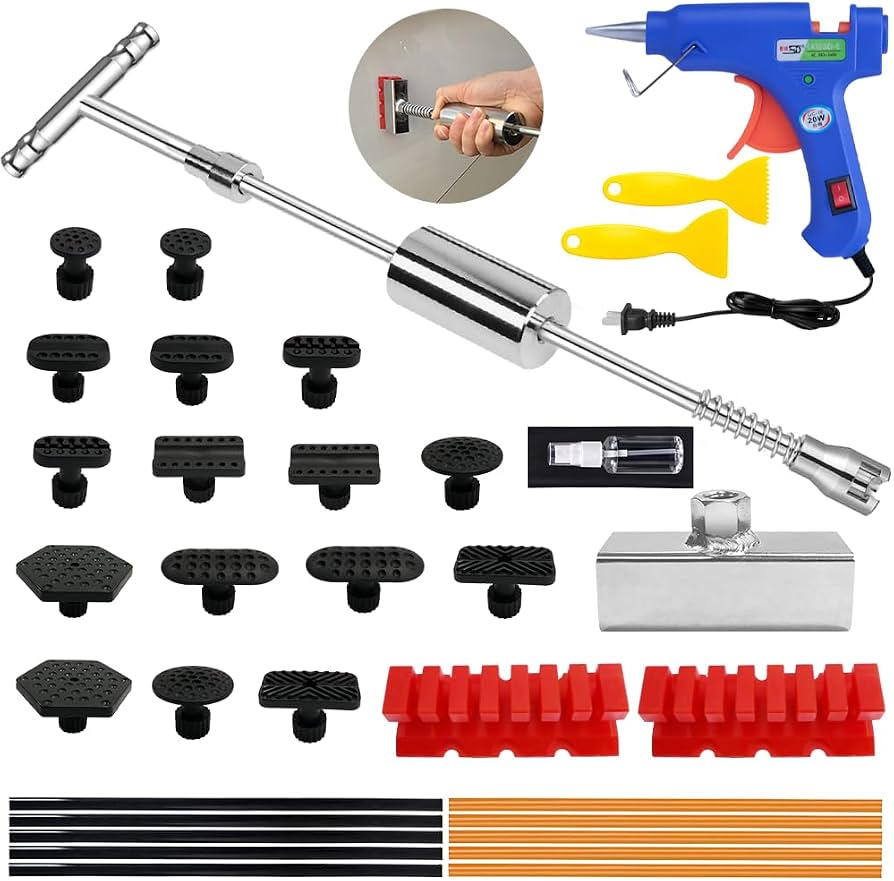
Dent Puller Kits use adhesive tabs or suction cups to pull metal or plastic outward. These are best for shallow dings on flat surfaces like doors or hoods. Look for kits with multiple tab sizes and strong adhesive. Success depends on surface prep—clean the area thoroughly before applying tabs. If the dent is too deep, the tabs may pop off before the dent releases.
Body Filler (Bondo) fills in creases and deeper metal dents that can’t be pulled out. This method requires sanding the paint, applying filler, sanding it smooth, and repainting. It’s the most labor-intensive option but handles damage that heat or suction can’t fix. Bondo itself is inexpensive ($10–$20), but you’ll need primer and paint for a finished look.
Plunger or Cup Kits rely on suction to lift dents. A simple toilet plunger can work for large, shallow dents on smooth panels. Specialized cup kits offer better grip and leverage. These are low-risk, low-cost attempts that sometimes yield surprising results for minor cosmetic issues.
For most homeowners, starting with a dent puller kit or heat method is wise. If those fail, body filler is the reliable fallback. Avoid methods that risk damaging paint, such as excessive heat on already compromised areas.
Inspect the expensive parts
2026 guide: How to Fix Car Dents and Repair Leather Seats at Home for Under $50 troubleshooting should start with a clear boundary: what is actually broken, and what still works normally. Check the display, network connection, paired devices, app access, and recent updates before assuming the whole system needs a reset. A small connection failure can make the main screen feel unreliable even when the core system is fine. Work from low-risk checks to deeper resets. Confirm power state, safe parking, account access, and signal first. Then restart the interface, wait for it to reload completely, and test the original symptom. Avoid changing multiple settings at once because that makes it harder to know which step actually fixed the problem. If the issue affects safety information, repeats after every restart, or appears with warning messages, treat the reset as a temporary diagnostic step rather than the final fix. Document the symptom and move to official support instead of stacking more DIY attempts.
-
Park and note the symptomPut the system in a safe idle state, then write down whether 2026 guide: How to Fix Car Dents and Repair Leather Seats at Home for Under $50 is frozen, blank, slow, disconnected, or only failing in one app.
-
Try the normal restart firstUse the standard screen or interface restart before changing settings, deleting profiles, or disconnecting accessories.
-
Retest one feature at a timeCheck touch response, audio, navigation, phone pairing, Wi-Fi, and app access separately so the failing path is clear.
-
Escalate repeated failuresContact official support when the screen stays black, warnings appear, or the same issue returns after a clean restart.
Plan for ownership costs
2026 guide: How to Fix Car Dents and Repair Leather Seats at Home for Under $50 troubleshooting should start with a clear boundary: what is actually broken, and what still works normally. Check the display, network connection, paired devices, app access, and recent updates before assuming the whole system needs a reset. A small connection failure can make the main screen feel unreliable even when the core system is fine. Work from low-risk checks to deeper resets. Confirm power state, safe parking, account access, and signal first. Then restart the interface, wait for it to reload completely, and test the original symptom. Avoid changing multiple settings at once because that makes it harder to know which step actually fixed the problem. If the issue affects safety information, repeats after every restart, or appears with warning messages, treat the reset as a temporary diagnostic step rather than the final fix. Document the symptom and move to official support instead of stacking more DIY attempts.
The simplest way to use this section is to verify the seller, compare the total cost, and resolve the biggest risk before you commit.
Fixing car dents: what to check next
Before buying tools, it helps to know what these methods actually do and what they cost. DIY fixes are viable for small, shallow dents where the paint is intact. For deeper damage or creased metal, professional paintless dent repair or traditional bodywork is usually the only reliable path.
Can you fix car dents yourself?
Yes, but only for specific types of damage. You can remove minor door dings or hail dents using a plunger, glue puller, or heat-and-ice method. These techniques work best on smooth, uncreased panels where the metal hasn't lost its memory. If the dent has sharp edges or cracked paint, DIY kits like Bondo filler are an option, but they require sanding, priming, and painting to look right.
How expensive is it to fix a dent on a car?
Costs vary wildly based on the repair method. DIY supplies like glue pullers, suction cups, and filler kits typically cost under $50, fitting this guide’s budget. Professional paintless dent repair (PDR) usually runs $50 to $150 per small dent. Traditional body shop repairs involving filler and paint start around $150 and can exceed $500 for larger panels.
How much will a dent cost to fix?
The price depends on size, location, and severity. A small door ding fixed with a DIY puller kit might cost $20 in materials. A medium-sized dent on a rear quarter panel handled by a pro could cost $100–$200. Large dents or those on body lines often require panel replacement, pushing costs well over $500. Always get multiple estimates if you choose a shop.
Is it worth fixing a small dent on a car?
If you plan to sell the vehicle, fixing small dents improves resale value and curb appeal. A few dings can make a car look neglected, lowering what buyers are willing to pay. If you’re keeping the car long-term, small dents rarely affect structural integrity or rust protection unless the paint is broken. In that case, fixing it prevents corrosion.
Helpful gear
Use these product recommendations as a starting point, then choose the size, material, and price point that fit how you actually use the gear.

As an Amazon Associate, we may earn from qualifying purchases.
No comments yet. Be the first to share your thoughts!